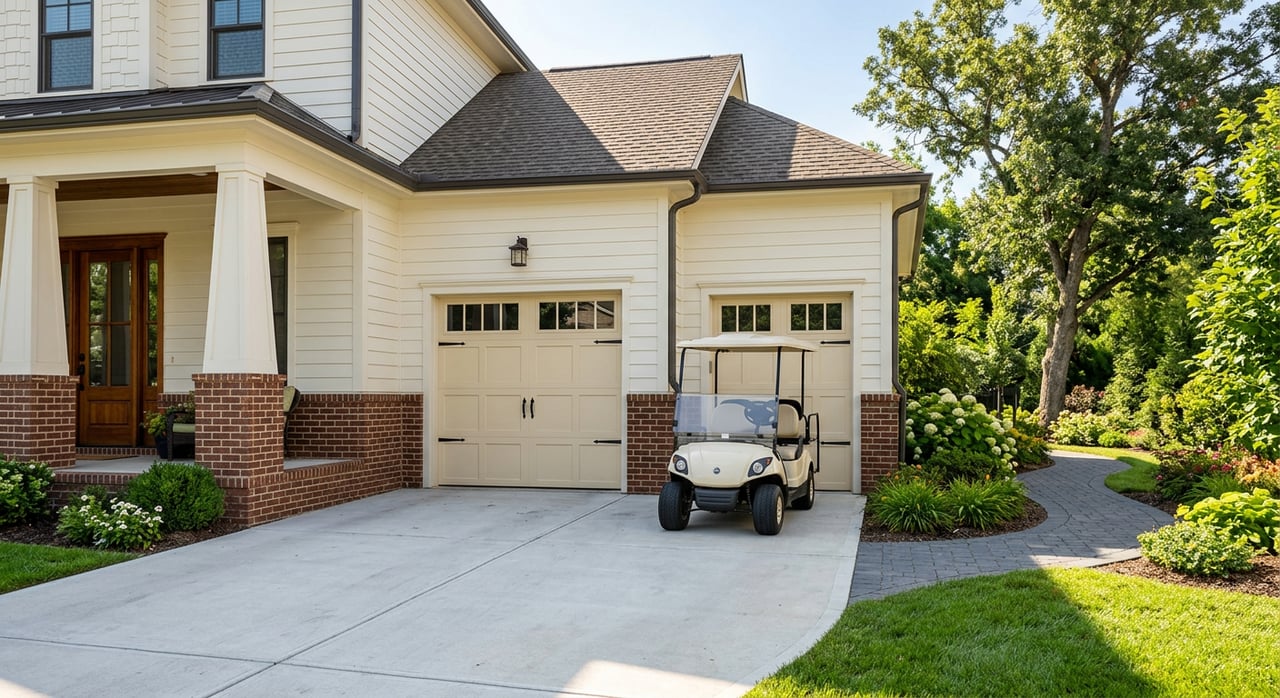
Thinking about trading gas station stops for a quiet 10 mph ride to dinner, school, or the lake? In Peachtree City, that idea is everyday life. If you are curious about how the golf cart lifestyle really works, you are not alone. In this guide, you will learn how the path system connects the city, the rules you need to know, safety basics, and the home features that make cart life easy. Let’s dive in.
What golf cart life looks like
Peachtree City’s identity is built around an interconnected multi‑use path system that links neighborhoods to shopping, parks, schools, and the amphitheater. It is common to see families run errands, students head to activities, and neighbors meet up for dinner by cart. The scale is what makes it work: the city maintains a 100+ mile network of paved paths designed for carts, bikes, and pedestrians, including tunnels and bridges at busy roads for safer crossings. You can explore the network overview on the city’s Multi‑Use Path System page.
The cart culture is widespread. City facts list roughly 11,000 registered carts among about 38,000 residents, which helps explain why carts feel like a second family vehicle here. You can find those figures on the city’s Facts & Figures page.
Rules you should know
Owning and operating a cart in Peachtree City is straightforward once you understand a few key rules. The city regulates carts on local paths and streets, and Georgia law defines different vehicle types.
Age and supervision
Operator age rules are specific. In general, ages 16 and up may drive independently. Fifteen‑year‑olds may drive under certain learner conditions, and ages 12 to 14 must be in the front seat with a licensed adult. Under 12 may not operate. You can read the age tiers in the city’s motorized cart ordinance.
Crossings and right of way
Carts and bicycles must come to a full stop before crossing public streets, as if a stop sign were present. This local rule is widely publicized to keep path behavior predictable and safe. See reporting on the city’s “stop before crossing” requirement in the Atlanta Journal‑Constitution.
Vehicle types, simply explained
Georgia law distinguishes a “golf cart,” a “personal transportation vehicle” (PTV), and a “low‑speed vehicle” (LSV). LSVs can reach about 20 to 25 mph, require state titling and tags, and may have extra equipment requirements. Most neighborhood carts here are treated as motorized carts under city rules with local decals. For definitions, see the Georgia code section on vehicle terms and the city’s Paths & Golf Carts page.
Registration, decals, and renewals
If you buy a cart, you must register it with the city and display a current decal. The city updates decal placement and renewal timelines as needed, including notes for the 2026 cycle. For forms, fees, and current due dates, check the city’s Paths & Golf Carts page.
Outside city limits and non‑residents
If your property sits in unincorporated Fayette County, separate registration and designated street/path rules may apply. Non‑residents who use Peachtree City paths may also owe a supplemental path‑user fee. Review county information in Fayette County’s golf cart guidance and confirm the latest details with the city.
Safety and enforcement
The city emphasizes education and enforcement on the paths. Expect police patrols, occasional checkpoints, and outreach, all aimed at keeping the network safe. The department has detailed past efforts in its annual reporting. Nationally, pediatric researchers highlight rising injuries tied to falls and collisions, which reinforces the need for seat belts where equipped, attentive driving, and age‑appropriate operation. See the Children’s Hospital of Philadelphia summary via PRNewswire.
Daily rhythms on the paths
Most trips are short and practical. You might grab groceries, pick up takeout, visit the library, or cruise lakeside at sunset. Schools and community venues provide cart parking, and village centers are set up with cart spots near storefronts. That convenience is a big reason the lifestyle sticks once you try it.
Buying a home for cart life
If cart access is on your wish list, a few home features will make life easier from day one.
- Storage and parking. Look for a dedicated cart bay, a nook in the garage, or a covered cart pad.
- Charging access. A 120V outlet often works for overnight charging. If you plan upgrades, a 240V outlet can be helpful.
- Path proximity. Short, direct access to the nearest path entrance reduces every trip by a few minutes. Explore the network on the city’s Multi‑Use Path System page.
- Lighting and visibility. If you ride at dawn or dusk, good lights and reflectors matter.
- HOA considerations. Some associations set storage or appearance standards. Review covenants before you buy.
Local real‑estate coverage often highlights these features because buyers ask for them. National outlets also note that Peachtree City’s cart lifestyle helps drive demand and stronger listing activity compared with many suburbs.
Insurance basics in plain English
The city’s ordinance places responsibility on the operator and advises owners to confirm insurance. Coverage often depends on what you drive and where you drive it. Some owners add a cart endorsement to homeowners or auto policies, others buy a standalone cart policy, and LSVs commonly carry auto‑style coverage because they are titled. For obligations and liability language, review the city’s motorized cart ordinance and consult your insurer.
Selling your Peachtree City home
If you are listing, highlight cart‑friendly details buyers value.
- Call out path access, the distance to the nearest village center, and any tunnels or bridges that make crossings easier.
- Feature a cart garage or pad, charging outlets, and outdoor lighting in photos and copy.
- If a cart or charger conveys, confirm the cart’s registration status and transfer details. The city requires owners to register and handle transfers on a set timeline, which you can find on Paths & Golf Carts.
Quick‑start checklist for newcomers
Use this list to get rolling faster once you move in.
- Verify whether your address is inside Peachtree City or in unincorporated Fayette County, then review the correct registration rules. Start with the city’s Paths & Golf Carts page and Fayette County’s golf cart guidance.
- Read the city’s motorized cart ordinance, especially age rules and required full stops at street crossings.
- Pick your vehicle type based on speed, range, and where you plan to drive. If you are considering an LSV, check state equipment and tagging rules in the Georgia code.
- Set up home charging and storage. If you need a temporary option or want to test‑drive the lifestyle, explore rentals and local resources via Visit Peachtree City.
- Ask your insurance agent to confirm coverage for your specific vehicle and where you plan to operate it.
Ready to roll in Peachtree City?
Whether you are shopping for your first home here or planning a move across town, choosing the right property can make cart life effortless. If you want a short path to the lake, a true cart garage, or easy access to a village center, you need a local guide who knows the nuances on each street. When you are ready to tour homes that fit your lifestyle, reach out to The Hayes Team for tailored advice and a smooth game plan from offer to close.
FAQs
How many miles of golf cart paths are in Peachtree City?
- The city maintains a 100+ mile multi‑use path network that connects neighborhoods to shops, parks, schools, and civic spots, outlined on the Multi‑Use Path System page.
Do you need a driver’s license to drive a golf cart in Peachtree City?
- Age rules govern who can drive and when supervision is required. In general, ages 16+ may drive independently, with specific conditions for ages 12 to 15 detailed in the motorized cart ordinance.
What are the rules for crossing roads on a golf cart in Peachtree City?
- Carts and bicycles must come to a full stop before crossing a public street, a local rule emphasized to improve safety and predictability per the Atlanta Journal‑Constitution.
If I live outside Peachtree City limits, can I still use the paths?
- Possibly, but non‑residents may owe a path‑user fee and county registration rules can differ. Review the city’s Paths & Golf Carts page and Fayette County’s golf cart guidance.
What home features help with the golf cart lifestyle in Peachtree City?
- Look for a dedicated cart space, a 120V or 240V outlet for charging, and short access to a path entrance. These features are practical selling points many buyers prioritize here.